
Homeowners, HOAs, Tariffs, Inflation
Recently, at my MN HOA we had a significant special assessment to pay the property-casualty premium which had increased significantly. To mitigate the increase for the HOA, the Board went with a higher deductible policy, the premium still increased, but not as much. Essentially, this means less insurance for more money. To compensate for deductible, I increased the coverage on my personal homeowners policy. In essence, a double whammy.
I was not surprised with the increase. In fact, I thought the Board did an excellent job of maintaining coverage on the HOA property. The reality is many insurance companies have left the HOA market place and for those who have stayed, they have increased the costs of obtaining coverage.
The same is true is true for homeowners insurance. One survey found that homeowners increased by an average of 70% Nationally since 2021. In addition, homeowners in some areas are no longer to obtain homeowners insurance. Again, I am not surprised. When I was doing my Long-Term Financial Trends” presentation a few years ago, one of the trends I identified was the increasing frequency and costs of natural disasters and the effect this was having on insurance rates. The trend was easier to ignore then, now not so much.
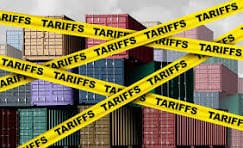
What I did not anticipate was adding tariffs to the equation. Tariffs increase the cost of imports which are paid by companies who normally pass the cost of the tariffs on to consumers. If those imports are construction materials, which they often are, then the cost of building or rebuilding increases. How does this relate to insurance costs. Insurance companies will price the cost of rebuilding into their coverage quotes. Which means that in addition to the effects of natural disasters, insurance companies know the rebuilding will now be more expensive and will price this cost into their premiums or in some cases, an insurance companies decision to not insure at all. Insurance companies also know that the effect of tariffs on inflation can take time to show up, but they will show up.
Its not just insurance premiums that will be affected by tariffs. A recent study S&P Global indicated that companies would pay $1.2 Trillion more in 2025 expenses because of the tariffs of which $900 Billion they were expected to pass on to consumers. Recently, the Yale Budget Lab estimated tariffs would cost US households almost $2,400 more a year.
As an aside, for the last year I have occasionally had someone tell me that tariffs are paid by foreign countries. When I hear this, I just smile and and walk away, you cannot fix stupid and no point arguing with it.
Along with the increasing costs of natural disasters and the effects of tariffs, there is an additional factor that may affect homeowners and HOAs. Regardless of your feelings about immigration policy, the current immigration can lead to higher prices. Some reasons include labor shortages and higher costs for businesses which they pass on to consumers. There are numerous examples of the food industry being affected by the current policy, but construction has also been affected. A recent survey by the Associated General Contractors of America (AGC) found that 92% of construction firms struggle to fill positions and almost 30% of the surveyed firms said they were affected by immigration actions. For the record, 25% of all construction workers are immigrants and about 33% of construction tradesmen are immigrants. Less workers, higher costs for consumers.
So what can homeowners and HOAs do?
Well, the first thing neither should do is blame insurance companies for premium increases. An insurance company’s objective is to insure a specific risk and make a profit so doing. If they cannot make a profit they will either raise the premiums to make a profit or no longer insure the risk. That’s what insurance companies are doing. At the same time, it is important to shop for coverage, but don’t just shop price, but shop price, claims payment ability and process to pay claims.
Second, specifically in the case of HOAs, understand these are macro trends. The increase in the economic costs of natural disasters has been happening for years and tariffs are a government induced macro trend. Do not blame the HOA Board for a macro trend.
Three, I suspect it will be important for both homeowners and HOAs to do a current and expected future cash flow analyses, a comprehensive risk management assessment, and current and future maintenance assessment.
Finally, hope is not a planning technique and denial is a city near a river in Egypt. The economic consequences of natural disasters will continue to increase and even if government policy on tariffs and immigration changes, it will take time to undo the effects of the current policies. Time to plan.